Welcome to ChristianEbooks.com
Download FREE PDF or text Files of
Original Source Materials that prove
that
ALL New Light Calvinists
after the First Great Awakening
asked for an immediate
"Decision For Christ"
This was NOT something
started by Charles Finney.
But the New Light Calvinist "Decision for Christ"
was not seen as "Saving Faith"
and certainly not de facto regeneration as it is today!
PLEASE educate yourself and help fight the HERESY of Decisional Regeneration.
For more on this subject, go to The Inquiry Room by Patrick McIntyre
You must have PDF software on your computer to view most of these files
after you have downloaded them to your computer.
 |
Read about the American Pentecost
|
 |
|
 |
If you want to take a Biblical Test to see if you're saved CLICK HERE
If you have no knowledge of New Light Calvinism, I suggest you start with a primer called Cats To Dogs
Click on the person (in alphabetical order by last name) or item you are interested in:
James Beattie |
Joseph Butler |
| Robert Wilkes Finley |
Charles Hodge |
John Stuart Mill
|
Princeton Theo Seminary |
Nathan Strong |
1st GENERATION NEW LIGHT CALVINISTS
First generation New Light Calvinists said "ye must be born again" and "do not use the excuse that you are waiting on God to regenerate". "Repent" meant do everything in your power to please God, using every means of grace available until God regenerates. Except for Solomon Stoddard, American First Generation New Light Calvinists preached against the Halfway Covenant, Owning the Covenant and unregenerate clergy. First generation New Light Calvinists did not agree on the validity or usefulness of "religious affections" as initial evidence of regeneration. After the denominational splits of First Great Awakening, Edwards, Bellamy and Hopkins all promoted "disinterested benevolence" as a more useful first evidence of regeneration.
The New Light Calvinists in England and Scotland like James Hervey and John Witherspoon developed a salvation theology based less on the supernatural and more on the metaphysical activity of God. If you read Witherspoon's discourses on Justification and Regeneration, you will find a blueprint for understanding why ministers educated in Scottish Common Sense Realism at Princeton changed the system in the Inquiry Room from BEST to BIST after the Civil War. Witherspoon's "kindler, gentler" theology was more suited to the optimism and hypocrisy of the Gilded Age.
More importantly, it promoted a "tipping point" view of regeneration that worked well will the "Eurka!" moment when ministers led seekers to read salvation scriptures with the BIST system. But the BIST system was not used with non-church people until after the Civil War. The BEST system was used by Finney up to the day he died in 1875. Nonthe less, Finney was deeply affected by Scottish Common Sense Realism, as it was the ONLY systematic theology he learned in preparation for ministry. John Witherspoon taught Archibald Alexander who taught George Washington Gale who taught Charles Finney Princeton predeterministic theology, something modern day Calvinists seem ignorant of in their anachronistic attacks on Finney.
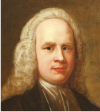 |
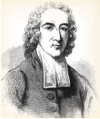
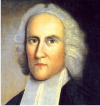
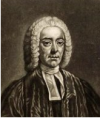
George Whitefield (1714-1770) was the main promoter of New Light Calvinism in North America in the First Great Awakening. Whitefield was a Calvinist methodist. Like his friend and co-worker John Wesley, Whitefield promoted the methodist discipline of using the means of grace as the only behavior consistent with the desire for salvation while waiting on God to regenerate. Also like Wesley, he never suggested that the immediate decision for Christ meant anything more than a desire to repent and submit to God. Regeneration was to be sought, but was never claimed because of any act of the will. Whitefield History 1 & 2 |
 |
James Hervey (1714-1758) is listed here because his book Theron And Aspasio was the center of a controversy in Calvinism over whether ministers should continue to use repentance and submission to God as means of grace. Robert Sandeman (see below) wrote a critique of the book in his Letters On Theron And Aspasio ridiculing New Light Calvinists for looking for evidence of regeneration, saying if a person was elected, "bare faith" was the only evidence needed. It is ironic that Sandeman's criticism of Theron and Aspasio provides the most complete description of how New Light Calvinists dealt with inquirers before the Inquiry Room was invented. James Hervey Memoirs |
SCOTTISH COMMON SENSE REALISM COMES TO AMERICA in 1768
The inculcation of students with Scottish Common Sense Realism in the College of New Jersey, Princeton, and by the Civil War, virtually ALL SEMINARIES, changed New Light Calvinist evangelism methods and theology. In a poll taken in New England in 1812, most New Light Calvinists were Hopkinsians and Bellamites that examined penitents for a supernatural change of character. In 1813, Princeton Theological Seminary was established. Within 50 years, Scottish Common Sense Realism had infected New Light Calvinism with a psychological view of regeneration. By 1914, the purpose and meaning of the Inquiry Room had changed from examining penitents for a supernatural change of character (the BEST system) to having penitents agree with salvation scriptures (the BIST system). Belief of salvation Scriptures was increasingly seen as evidence of saving faith, and by the end of the century, most ministers no longer examined penitents for a change of character. It was no great stretch for Billy Sunday to eliminate the Inquiry Room altogether, since penitents presumably came forward because they believed the salvation scriptures inherent in the altar call. The ministers listed below are Scottish Common Sense Realists who were also, at the same time, New Light Calvinists.
| ALL MINISTERS WHO WERE TAUGHT SCOTTISH COMMON SENSE REALISM HAVE A YELLOW FIELD BEHIND THEIR BIOGRAPHY |
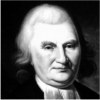 |
John Witherspoon (1723-1794) was perhaps the most influencial person in the movement of American Calvinism away from the experiential salvation theology of Jonathan Edwards and his disciples, Bellamy and Hopkins. Witherspoon brought with him from his native Scotland, Common Sense Realism when he became 7th President of the College of New Jersey (later called Princeton) in 1768, just 10 years after Edwards had filled that position. John Witherspoon contradicted New Light Calvinist salvation theology and the exact reason the College of New Jersey was established, that is, to have a College sympathetic to New Light Calvinists. |
 |
James Ebenezer Blythe (1765-1842)
t |
 |
Robert Wilkes Finley (1750-1840)
t |
1.5 GENERATION NEW LIGHT CALVINISTS
It is useful to place some New Light Calvinists between the first and second generation
|
John Blair (1720-1771) is listed here because his sermon on regeneration is an excellent example of American New Light Calvinism before Witherspoon introduced Scottish Common Sense Realism to the College of New Jersey (later Princeton). Blair was Presbyterian and 6th President of the College of New Jersey 1767-1768. He no doubt would have fought Witherspoon taking over the College if he knew his theology. |
|
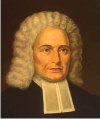
Samuel Davies (1723-1761) is listed here because his teachings on regeneration are an excellent example of American New Light Calvinism before Witherspoon introduced Scottish Common Sense Realism to the College of New Jersey (later Princeton). Witherspoon changed regeneration from a supernatural change of character to a tipping point of the mind that evolved into "decisional regeneration". Davies was a Presbyterian, and the 4th President of the College of New Jersey from 1759-1761. |
2nd GENERATION NEW LIGHT CALVINISTS
Second generation American New Light Calvinists were split into three camps. The Bellamy camp, the Hopkins camp, and the Witherspoon (Princeton) camp.
Joseph Bellamy influenced Timothy Dwight, who in turn influenced ministers at Yale. Bellamy's theology is almost identical to that of Jonathan Edwards. He taught law works and using the means of grace and had a more supernatural explanation for regeneration than Hopkins.
Samuel Hopkins, on the other hand, had a more metaphysical approach and taught that using the means of grace and law works were excuses for not repenting and submitting to God. Hopkins is most remembered for his brutal idea that "disinterested benevolence" meant a willingness to go to hell if it be God's will. Asahel Nettleton and Lyman Beecher were more influenced by Hopkins than by their teacher Timothy Dwight at Yale.
The third camp came out of the College of New Jersey (later called Princeton). John Witherspoon brought Scottish Common Sense Realism to America and replaced the Jonathan Edwards influence at Princeton. Witherspoon did not like the Jonathan Edwards focus on "religious affections" and provided a metaphysical substitute including a "kinder, gentler" "disinterested benevolence" than that of Hopkins or even Bellamy.
The American first generation New Light Calvinists taught the Puritan understanding of law works and using the means of grace, so they would never use expressions like "make yourself a new heart" that could be misunderstood as "regenerate yourself". But second generation American New Light Calvinists were often identified as Sandemanians for good reason. In 1770, Joseph Bellamy (see below) defended Samuel Hopkins against a charge of being a Sandemanian by telling the accuser that Hopkins of course tells sinners to "pray for a new heart", leaving out the fact that Hopkins also told them, "make yourself a new heart".
To learn more about the consecutional basis of Hopkins telling seekers "make yourself a new heart", click here.
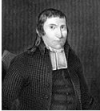 |
Jonathan Edwards, Jr. (1745-1801) , sometimes called "the younger" to distinguish him from his famous father, was a typical second generation New Light Calvinist minister that called people to make an immediate decision for Christ. In the Works Of Jonathan Edwards, D.D., you will see references to both Joseph Bellamy and Samuel Hopkins, the two main interpreters of his father's theology, and frequent guests in his home as a child.. Like Timothy Dwight, Jonathan Edwards maintained a more Puritan view of law works, duty faith, and using the means of grace than later New Light Calvinists. |
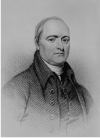 |
Timothy Dwight (1752-1817) was, in my opinion, the last of the rock-solid, orthodox, New Light Calvinists. He did not abandon law works, the means of grace and common grace for the sake of demanding an immediate decision for Christ. Both Lyman Beecher and Asahel Nettleton attended Dwight's Yale University (President 1795-1817) and considered him old fashioned and antiquated in his adherence to Puritan practices and theology. For more on this subject, please go to www.inquiryroom.com/Timothy_Dwight_the_last_Puritan.htm For non-theological, but historically important works of Timothy Dwight, see the Assorted Nineteenth Century Literature section. Timothy Dwight chronicled 1800-1816 America with first hand accounts in his four Travel volumes. |
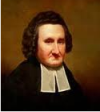 |
Joseph Bellamy (1719-1790) was the second most influencial interpreter of the theology of Jonathan Edwards. His theology was less man-mechanical and more God-relational than that of Samuel Hopkins. His "disinterested benevolence" was more emotional, more tied to feelings for the person of God. It is my oppinion that had the third generation New Light Calvinists adopted Bellamy's theology instead of Hopkins, the evolution of disinterested benevolence away from feelings and toward agreeing with scripture in the Inquiry Room would have would not have happened as quickly as it did. |
The Works of Joseph Bellamy Volumes 1 & 2 are a treasure trove of original source material that show the motivating influences of New Light Calvinist theology following the First Great Awakening. Everyone was interested in preventing the "animal excitements" that harmed the First Great Awakening. The idea that true revival was when God changed carnal sinners into rational saints became a guiding principle of second generation New Light Calvinists. At the same time, an extremely rational version of Calvinist salvation was spreading in New England by Robert Sandeman (see notes on Eighteenth Century Literature).
The following discussion will help illustrate the confusion caused when people assume that all ministers who asks seekers to make an immediate decision for Christ did so for the same theological reasons.
On page 31 of The Works of Joseph Bellamy Volume 1, Bellamy tells a critic of New Light Calvinism in a letter written in 1770 that Hopkinsianism is not Sandemanianism. In commenting on the error of confusing Hopkinsianism with Sandemanianism, the editor of this 1859 volume said, "the peculiar interest that once attached to the subject of the following letter, has long since passed away". HE WAS WRONG. the only way the controversy could pass away is if all New Light Calvinists accepted "bare faith" as saving faith. If you read about John Kirk of the Scottish Evangelical Union below, you will find he incorrectly thought Charles Finney was a "bare faith", non-election minister. At almost the same time, Kirk's publication Evangelical Repository Magazine defended the Evangelical Union against the claim it was Sandemanian, not because they didn't believe in "bare faith" like Sandeman, but because they did not believe in Sandeman's view on election. If you read about the Methodist minister Nathan Bangs below, you will find he faulted the Hopkinisan New Light Calvinists as early as 1802 because he thought they were promoting "bare faith" by equating repentance and submission to God as "saving faith". There are many reasons why ministers do what they do. Lumping all ministers together because they ask for an immediate decision for Christ has caused much confusion.
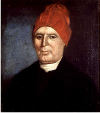 |
Samuel Hopkins' (1721-1803) substitution of "disinterested benevolence" as the initial evidence of regeneration for Jonathan Edwards' "religious affections" was the device that started the evolution of New Light Calvinism away from 'feelings"- based evidence of regeneration to "doctrinal correctness"-based evidence of regeneration. This is how New Light Calvinism changed the purpose of the Inquiry Room from diagnosis and direction to a "repeat after me" and "do you agree with this scripture?" empirical method. The theologic basis for Hopkin's immediate decision for Christ is shown here. |
Samuel Hopkins System of Doctrines 1 and 2 is listed as perhaps the most influential of all New Light Calvinist works. Hopkins by 1765 was criticized by Old Light Calvinists as inventing a whole new theology. Over 1,000 subscribers from around the English speaking world were sent this two volume set in 1797. Hopkins was by far the most successful interpreter of the doctrine of Jonathan Edwards. By 1812, most Northern New Light Calvinists considered themselves Hopkinsians. He took Edwards moral will (regenerated) versus natural will (unregenerated) perspective and fashioned the New Light Calvinist justification for asking people to make an immediate decision for Christ.
Hopkins wrote, "There are the following reasons for pointing out to men their duty, and requiring them to repent and embrace the gospel, in order to be saved, though they be now impenitent, and have no heart to comply; and it is certain they never will have, till God gives them a new heart. 1. Because this is their duty, and it is proper and important that they should be told, and be made to know what is their duty ; For, 2. If they know not what is their duty, and what is necessary for them to be and do, in order to be saved, they cannot know what their state and character is, whether they be willing to comply with it or not , and consequently, will not know what obstinate, wicked hearts they have, and that need they stand in of sovereign grace, to give them new hearts ; which is of the greatest importance to be known. 3. Because they must so far actually comply, as to repent and obey the gospel, or perish. Therefore, as they must really do this, and it must be their own voluntary act, in order to be saved, it is proper and necessary, that they should be made to know it, by requiring it of them. And the gospel cannot be preached in any other way."
Modern evangelical Christians do not have the knowledge base to understand what Hopkins meant by "they must really do this, and it must be their own voluntary act". He was saying, "those that God has regenerated (by saving grace), being the only ones who can truly obey the gospel (all the rest are hypocrites), must nonetheless obey the gospel because that is the means of salvation". Although Hopkins never equated the cause of salvation (saving grace) with the means of grace (repentance and submission to God), his consecutional (consecutional means faith is the consequence of grace) rational for saying "make yourself a new heart" was misunderstood by later generations, until finally in 1914, Billy Sunday equated the means of grace with grace itself and equated coming forward in an altar call with saving faith.
For an explanation of the New Light Calvinist decision for Christ, click here.
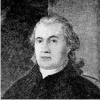 |
Nathan Strong (1748-1816) was a classmate of Timothy Dwight at Yale in 1769. Strong is mentioned in Archibald Alexander's biography as the leading light in the Plan of Union which alied Congregational and Presbyterian ministers in the Camp Meetings of the Second Great Awakening. Presbyterian Old Lights dissolved the Plan Of Union shortly after the hersey trial of Lyman Beecher in 1837. |
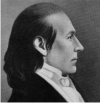 |
William Graham (1746-1799) was extremely important to the evolution of decisional regeneration, because it was he that mentored Archibald Alexander when he was forming his views of regeneration at age 17. Alexander ignored the lessons of his own "religious affections" and adopted the "truth impressions" view of regeneration inherent in Graham's Scottish Common Sense Realism learned from John Witherspoon. |
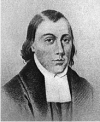 |
John Blair Smith (1756-1799) was a rival student of William Graham (see above) at the College of New Jersey under John Witherspoon. Smith, a Bellamite, was fortunately regenerated early in life, so he was not debilitated by the Scottish Common Sense Realism of Witherspoon (unlike Graham) when he attended the College of New Jersey (Princeton) before the Revolutionary War. |
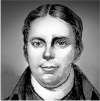 |
Andrew Fuller (1754-1815) |
2.5 GENERATION NEW LIGHT CALVINISTS
It is useful to place some New Light Calvinists between second and third generation
 |
Archibald Alexander (1772-1851) was one of the three founding fathers of Princeton Theological Seminary in 1812. Although histories list him as an "old School" Calvinist, he believed in asking people to immediately repent and submit to God and actively led revivals- this is why I place him in the Third Generation New Light Calvinist category. Alexander is significant because he was George Washington Gale's greatest theological source. Alexander attributed "enthusiasm" to mental illness, a clear break with Edwards' Religious Affections. |
 |
James Richards (1767-1843) was a Bellamite, educated at Yale by Timothy Dwight. In his work Lectures On Mental Philosophy And Theology he ridicules Scottish Common Sense Realism and explains the Biblical basis of Jonathan Edwards' theology that includes mMoral depravity, the immediate influence of the Holy Spirit and regeneration as a supernatural change of character. |
3rd GENERATION NEW LIGHT CALVINISTS
Third generation New Light Calvinist ministers before the Civil War used the Inquiry Room for diagnosis and direction of seekers, using the BEST (Biblical Evidence of Salvation Test) method. Disinterested benevolence was considered the "gold standard" for evidence of regeneration. From 1820-1860, the standard became less based on seekers having religious affections when they agreed with the decreees of God and more just agreeing with Scripture. This slow change continued until at the end of the century, most fifth generation New Light Calvinists, used the BIST (Belief In Scripture Test) method instead of the BEST method.
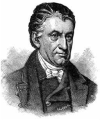 |
Lyman Beecher (1775-1863) was the second most influential New Light Calvinist minister in the transitional years from 1815-1840. For that reason, there are many biographies and support original source material provided here. Beecher was fighting Bostonian Deists, Universalists, rationalists and liberal Christians for much of his ministry. This explains why his magazine, The Spirit Of The Pilgrims, claimed that Calvinism, for example, did not teach infant damnation. Beecher saw New Light Calvinism as God's way of making Calvinism more palatable to the modern world. He endorsed some of Nathaniel Taylor's sermons by publishing them without comment. |
Articles and book reviews in Lyman Beecher's publication, The Spirit of the Pilgrims reveals how New Light Calvinists believed in the late 1820's and early 1830's they were in an unprecedented season of grace preparing the way for the post-millennial return of Christ to the victorious church. Part of this preparation was their New Light theology and practice of demanding an immediate decision for Christ, described in 1834 as "the harmonious operation of the moral machinery which the church is using". Other innovations being promoted as disinterested benevolence were women's rights, abolitionism and temperance. The Civil War was in large part assisted by the New Light Calvinist "put up or shut up" demonstration of disinterested benevolence. Ironically, it was the secular carnage of the Civil War that seemed to prove once and for all that the New Light Calvinists were right about God wanting man to do more than rest in the mysterious sovereignty of God. Action was required; whether it is telling people they could be saved if they made a decision for Christ or going to war to set man free.
 |
Asahel Nettleton (1783-1844) is often cited by modern historians as trying to stem the destruction of orthodox theology by Charles Finney. Actually, he and Lyman Beecher conspired to stop Finney's methods, such as the mourner's bench, having females pray, questioning the salvation of anti-revival ministers, etc., not his theology. Nettleton, like all 3rd generation New Light Calvinist evangelists, preached for an immediate decision for Christ, examined seekers in the inquiry room, and told sinners five times "make yourself a new heart". in one sermon. |
For more information of how a well-informed minister in 1876 saw the impact of Nettleton's theology, please go to www.inquiryroom.com/revivals_of_the_century_by_Lyman_H_Atwater.htm
For excerpts showing Nettleton's call for an immediate decision for Christ and his use of the inquiry room, go to www.inquiryroom.com/Asahel_Nettleton_confuses_preference_with_disposition.htm
 |
George Washington Gale (1789-1861) taught New Light Calvinist systematic theology to Charles Finney to prepare him for ordination. Although Finney thought Gale did not understand salvation experientially, he repected Gale. He said, "The only minister under whose instruction I ever sat who was really a man of learning and ability, was brother Gale". The Autobiography Of George Washington Gale gives first hand accounts of Finney. |
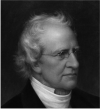 |
Charles Hodge (1797-1878) taught Scottish Common Sense Realism at Princeton Theological Seminary. |
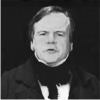 |
Jedediah Burchard (1790-?) was similar to Charles Finney in many ways. He was taught New Light Calvinist systematic theology by George Washington Gale to prepare him for ordination. He used the Mourner's Bench long before Finney. The Autobiography Of George Washington Gale gives first hand accounts of Jedediah Burchard on pages 163-174. Burchard was an active evangelist long before Finney was saved. THE PHOTO IS AN ACTOR - SEE THE VIDEO |
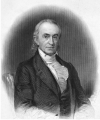 |
Nathaniel W. Taylor (1786-1858) was the most influencial theologian of the third generation New Light Calvinists. He was a favorite pupil of Timothy Dwight, and unlike Beecher and Nettleton, he agreed with Dwight's more Puritan appreciation of using the means of grace. Taylor's Correspondence is the most succinct expose of his doctrinal views. Taylor's Review of Dr. Tylers Strictures is a good fleshing out of the prevalent views of regeneration in 1830. |
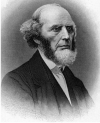 |
Charles Finney (1792-1875) was the most famous New Light Calvinist of his day. His theology was almost identical to the most famous New Light Calvinists before him, Asahel Nettleton and Lyman Beecher. Unfortunately, most of the books written against decisional regeneration in the last 40 years have cast Finney as a unique heretic, and Nettleton and Beecher as holding the line on Calvinist Orthodoxy. If you read the writings of Beecher and Nettleton, you'll find they objected to Finney's methods, not his theology. |
The version of Finneys's Systematic Theology presented here was published in 1847. If you take the time to read it, you will find his views on disinterested benevolence, election and perserverance of the saints are almost identical to those found in Samuel Hopkins' Systems of Doctrines.
Finney's methods were an expression of the most experiential form of New Light Calvinism ever tried by an evangelist. Put simply, Finney believed the Holy Spirit was present in great power, and the New Light Calvinist view that anyone God regenerated would exhibit immediate disinterested benevolence and a supernatural change of character was put to the test by Finney. When Finney and Lyman Beecher worked together in the Inquiry Room, Finney insisted that anyone who was saved would immediately give EVERYTHING to God (because God would have changed their character in regeneration and the indwelling of the Holy Spirit). When Beecher soothed the inquirers by telling them God would give it all back, Finney knew that Beecher was unwilling to put disinterested benevolence to the test. The Lectures On Revivals provided here is essentially the same as the original published version of 1839. In 1839, Finney's Lectures were read all over the English-speaking world.
Twenty years later, Finney was shocked to find in Scotland, Reverend John Kirk (see below) and other members of the Evangelical Union thought he believed in bare faith and no election because of what they read in his Lectures On Revivals. Finney wrote, "Their views of faith as a mere intellectual state I could not receive. They explained away, in a manner to me utterly unintelligible, the doctrine of election, and on sundry points I found I did not agree with them. However, Brother Kirk insisted that he accepted my views entire as he heard me preach, and that they were the views of the E. U. church.:"
Finney would be even more shocked today that many modern Calvinists and Arminians, not knowing the consecutional basis of the New Light Calvinist decision for Christ, have labeled him a bare faith, non-election Pelegian.
For an explanation of the New Light Calvinist decision for Christ, click here.
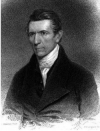 |
Letters on The Religious Revivals by Ebenezer Porter (1772-1834) contains first hand accounts of how New Light Calvinists dealt with seeekers in the Inquiry Room before 1820. Ebenezer Porter was President of Andover Theological Seminary in the early 1830's when he shared some of these accounts in Spirit Of The Pilgrims magazine in an attempt to caution New Light Calvinist from departing from piety and metaphysicalizing disinterested benevolence - something that happened after his death. Porter refers to Joseph Bellamy as his main theological influence |
The significance of the theology coming from graduates of Princeton Theological Seminary in the evolution of the Inquiry Room from the BEST system to the BIST system can not be underestimated. While Yale was turning out Bellamites and Hopkinsians, Princeton graduates were schooled in Scottish Common Sense Philosophy. The difference was not in theology, but rather the emphasis placed on Biblical evidence of regeneration and the indwelling of the Holy Spirit. Ashbel Green edited the Christian Advocate Magazine. Read the article On Free Will starting on PDF page 118, then resuming on PDF page 172 and see how close the so-called "Old School" Common Sense view and the Bellamite/Hopkinisan view were in predeterminist, consecutional theology. Then read Dr. Alexanders (Archibald Alexander) Letter starting on PDF page 474, then resuming on PDF page 520 regarding evangelists that lack piety and perhaps saving knowledge of Christ. The article dismisses the confidence of certain ministers as a lack of humility. "In past times Satan apposed revivals, by stirring up formalists and worldly professors to revile them; but, now, he seems to have changed his ground, and to aim at accomplishing the same end, by sending into the work, men, who by their pride and imprudence, will be sure to bring a blot upon the whole cause. Perhaps, in the selection of young men for the ministry, too much regard is paid to forward zeal, and too little to modesty and humility...few Christians at this day, seem to have deep foundation for their piety. In most, it seems to be an obscure and feeble principle, struggling for mere existence. In listening to the narratives of religious experience from many candidates for the ministry, I have been struck with the want of clear views and strong faith, in most of them." I agree with Alexander - by 1829, after two generations of New Light Calvinism that de-emphasized Law works and using the means of grace in order to get seekers to make an immediate decision for Christ, most conversions were superficial. Alexander witnessed the problem first hand when he was seventeen years old - the assuming of "faith of assurance" as the de facto result of "faith of reliance".
No college exceeded Princeton in influencing the development of the ninteeth century decison for Christ. Princeton graduates founded and directed many colleges in the South and West, and college leaders everywhere followed the model created by Princeton President John Witherspoon in introducing the yearlong senior instruction in moral and mental philosophy as the most important college course. Drawing on Scottish Common Sense Realism, Witherspoon's course defended Christian dogma and morality by means of Enlightenment rationalism.
During the nineteenth century it trained more students (over 6,000 by 1912) than did any other seminary, and it articulated one of the most influential theological systems then promoted in America. The Princeton Theology was a nineteenth-century statement of Reformed Calvinism as influenced by Common Sense Philosophy. It emphasized the trustworthiness of Scripture, the ability of the human mind to understand Christian truth and the total dependence of man on God for spiritual grace. Its chief spokesmen were Archibald Alexander, Charles Hodge, Archibald Alexander Hodge and Benjamin B. Warfield.
Modern Calvinists often ignore 19th century Princeton's "Old School" conflict between Scottish Common Sense Realism and Calvin's teaching that fallen man is debilitated by the effects of sin. Common Sense philosophy assumes fallen man has intuitive powers that work well in concert with the truth of Scripture and minimizes the need of supernatural illumination of the Holy Spirit in pre-regenerate man. Archibald Alexander, for example, relegated the influence of the Holy Spirit to that of empowering scripture (similar to, but not as extreme as Campbellism). While this appealed to nineteenth century Americans, it undermined the supernatural nature of saving repentance and saving faith. The Puritans had the means of grace and law works as their pre-regeneration context. Common Sense philosophy minimized the need for the means of grace and law works to illuminate the sinner to his desperate condition, substituting instead, the purposeful acceptance of the truth of Scripture. Nineteenth century "Old School" Princeton Calvinists made a straw man argument against the "New School" view of decisionism by ignoring the consecutional basis implicit in predetermination while ignoring their own insistence on pre-regeneration common grace. Here is a 19th century Calvinist "Old School" explanation of consecution in predetermination proved by Comnon Sense Realism (common grace before regeneration) by A. A. Hodge:
" ...you get hold of one end of the chain, you keep following it up. But what is the force of the chain? You have got a chain of logic hanging down, and you climb up that chain link by link; but what supports the chain at the other end? Logic is like a ladder — by means of it you go up step by step. But how are you going to prove that the bottom of it is all right? The ladder rests on the ground; but what supports the ground? You prove this by that; but what proves that? You must have a starting-point, an ultimate fact, and these ultimate principles are the most sure, because if the ground is not steady the ladder is not steady; the ground must be more steady than the ladder. The things which you start from, which are the means of bringing us results, are more sure than other things which are proved by them. You and I know that we are free. You and I know that we are responsible. You and I have that assurance of knowledge which is before all science." Read the entire article of Free Will.
4th GENERATION NEW LIGHT CALVINISTS
Fourth generation New Light Calvinist ministers after the Civil War are called "New Light" because they asked seekers to make an immediate decision for Christ. But unlike third generation New Light Calvinists, they used the Inquiry Room less with the BEST method (Biblical Evidence of Salvation Test) and gradually more with the BIST method (Belief In Scripture Test). D. L. Moody's cooperative meetings involved ministers from many denominations and few standards. Moody could not personally oversee the Inquiry Room, so diagnosis and direction gave way to ungifted and unqualified workers seeking quick results.
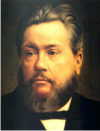 |
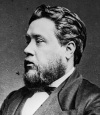
Charles Spurgeon (1834-1892) is often cited by modern Calvinists as free from the misunderstandings inherent in fourth and fifth generation New Light Calvinism. Read one of his sermons and you be the judge. He mixed metaphysical law and immediate experience and used the evangelical bait and switch like other New Light Calvinsts after the Civil War. |
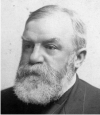 |
Dwight Lyman Moody (1837-1899) is perhaps the single most influencial minister in the evolution of the Inquiry Room from the BEST system to the BIST system. Moody expected the immediate activity of the Holy Spirit to produce Biblical Evidence of Salvation (BEST). Unfortunately, some of his helpers substituted Belief In Scripture (BIST) as saving faith (see J. Wilbur Chapman). |
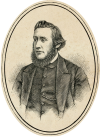 |
Life And Labors Of Duncan Matheson (1824-1869) is presented as a typical example of nineteenth century Scottish ministers who used the Inquiry room after 1850. He saw the errors being caused by untrained and ungifted counselors giving salvation scripture to seekers who were not regenerate. "I have seen them giving the comforts of God's children to the anxious... Oh, if there is one part of the work in which we need more than in another the aid of the Holy Spirit, it is in dealing with anxious souls." |
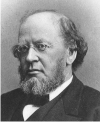 |
Archibald Alexander Hodge (1823-1886) was named after one of the three founding fathers of Princeton Theological Seminary by his famous father, Charles Hodge. Although some histories list him as an "old School" Calvinist, he believed in asking people to immediately repent and submit to God.- this is why I place him in the fourth Generation New Light Calvinist category. please read his article Free Will to see how close he was to other orthodox New Light Calvinists of the Joseph Bellamy and Timothy Dwight stamp. |
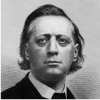 |
Henry Ward Beecher (1813-1887) started out as a fourth generation New Light Calvinist, but was so influenced by science, socialism and psychology that he became the first popular New Age Evangelical. He abandoned the authority of scripture, the belief in the God of the Old Testament, the belief in hell, but kept a pantheistic view of God and "once saved always saved". |
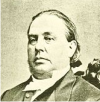 |
Lyman H. Atwater (1813-1883) was the Professor of Mental and Moral Philosphy of Princeton when he wrote the illuminating article for the Princeton Review in 1876. Educated at Yale (where American versions of New Light Calvinism were taught) and teaching at Princeton (where Scottish Common Sense Realism was taught) gave him a well-rounded perspective of Asahel Nettleton and the Calvinist decision for Christ in 1876. |
5th GENERATION NEW LIGHT CALVINISTS
Most famous Fifth generation New Light Calvinist ministers after 1875 got their training working with Moody. They no longer spoke of saving faith requiring regeneration and the indwelling of the Holy Spirit. The BEST system was gradually replaced by the BIST system in the Inquiry Room. The Inquiry Room seemed superfluous when Billy Sunday finally eliminated it in 1914. His salvation was so "simple" that as his wife boasted, "there was no more need for inquiry rooms."
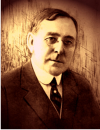 |
J. Wilbur Chapman (1859-1918) is best known today for his biography of D. L. Moody. Chapman, like most evangelists at the end of the nineteeth century, worked with D. L. Moody before going out on his own. He experimented with mass evangelism: city-wide crusades that coordinated simultaneous meetings in numerous churches. Although Chapman should have known better from his training at Lane Theological Seminary, he used a "read this scripture" approach in the Inquiry Room. His young assistent, Billy Sunday, learned this misleading practice, and assumed that agreeing with scripture was "saving faith". After a few years out on his own, Sunday made the basis of his altar call "agreeing with scripture" and eliminated the inquiry room as a relic of the superstitious past. |
J. Wilbur Chapman, A Biography recounts the event that probably was the beginning link in a chain of events that led directly to the heresy of decisional regeneration. The future evangelist did not know he was saved when D. L. Moody counseled him in the Inquiry Room. Page 29-30: " When the great evangelist called for an after-meeting I was one of the first to enter the room and to my great joy Mr. Moody came and sat down beside me. I confessed that I was not quite sure that I was saved. He handed me his opened Bible and asked me to read John 5:24; and, trembling with emotion I read "Verily, verily, I say unto you, He that heareth my word, and believeth on him that sent me, hath everlasting life, and shall not come into condemnation; but is passed from death unto life." He said to me: "Do you believe this?" I answered: "Certainly." He said: "Are you a Christian?" I replied: "Sometimes I think I am and again I am fearful." "Read it again," he said. Then he repeated his two questions and I had to answer as before. Then Mr. Moody seemed—it was an only time—to lose patience, and he spoke sharply: "Whom are you doubting?" and then it all came to me with startling suddenness. "Read it again," said Moody, and for the third time he asked: "Do you believe it?" I said: "Yes, indeed I do." "Well are you a Christian?"—and I answered: "Yes, Mr. Moody, I am." From that day to this I have never questioned my acceptance with God." J. Wilbur Chapman was to use this "repeat after me" approach in his own Inquiry Room. When he taught Billy Sunday how to be an evangelist, Sunday, who boasted he knew as much theology as a bunny rabbit knew about ping pong, assumed that salvation happened when a person accepted scripture as true.
The life and Work Of D. L. Moody, a biography written by J. Wilbur Chapman, contains a hint of how Chapman may have seen the Inquiry Room as a "repeat after me" place instead of a place for diagnosis and direction. Chapman records D. L. Moody as having said, "I do not think I should attempt to have meetings without the inquiry room. People are impressed under the sermon, but what you want is to deal with them personally. Here and there one is converted under the sermon, but for every one converted under the sermon, hundreds are converted in the inquiry room." In The New York Hippodrome crusade of 1876, Inquiry Rooms were systematically organized: "There were, for work with the unconverted, each day two general directors and sixteen Christian leaders; each leader had twelve to fourteen helpers, so that in each of the seven inquiry rooms there were usually two leaders and twenty to thirty helpers." That's 224 counselors. It is obvious that in some cases, the Inquiry Room may have become little more than a "repeat after me" system.
 |
Frank Haven Hinman (1859-1894) was a fairly typical fifth generation New Light Calvinist. He is featured here because he wrote Hints And Helps For The Inquiry Room, which describes the BIST method used at the end of the nineteenth century. His primary focus was not examining seekers for indications or regeneration. He told seekers, ""repent and believe." If we will meet these demands, He can and will transform us by regeneration"...He also used. the evangelical bait and switch* |
THE EVANGELICAL BAIT AND SWITCH is when a minister in the Inquiry Room shows a seeker a salvation scripture and says "do you believe this?" The seeker would not be in the Inquiry Room if he were not ready to receive some sort of counsel, so of course he says "yes". Ever since D. L. Moody used scripture this way with dying Civil War soldiers, New Light Calvinists increasingly used scripture with a "bare faith" approach, until by 1887, Frank Haven Hinman wrote: "the trouble is not so often a failure to grasp the
fact that salvation is obtained by simply believing, as
a wrong conception of how the knowledge of their
being saved is obtained. .. Teach
them to look away from their feelings to Christ. Show them that already they have a witness of their
acceptance in the Word if they are believing on Christ. Turn to John 3:36, and let them read " He that believeth
on the Son hath everlasting life. " It is by believing
and not by feeling, that they have a knowledge of
their salvation. By believing on Christ they have salvation; by believing His word they have assurance...turn to John 3:36 and let
them read it. Then ask them if God does not mean
what He says...Then have them read the text, putting in their names in place of the words "world" and "whosoever," i. e.
if the name of the inquirer should be Marshall Green,
he would read the text, '' For God so loved Marshall
Green that he sent his only begotten Son, that Marshall
Green, believing on him, should not perish but
have everlasting life." This makes the text as definite
as it would have been if there had been no one
but Marshall Green in the world. Point out that the
only condition given upon which is based everlasting
life, is the one of believing, and if he is believing on Him he has a right to claim it.
The bait and switch is the seeker is told if he believes John 3:36 (or another salvation scripture), he must be saved because he has already believed on Christ. Every person who comes to an Inquiry Room believes John 3:36. The reason most seekers are unsure of their salvation is they have no experiential evidence that they believed on Christ. If "believing on Christ" in John 3:36 is merely "bare faith", then this is not a bait and switch. But if "believing of Christ" involves regeneration and the indwelling of the Holy Spirit, then this technique is a bait and switch. Now you can understand why Billy Sunday, another Presbyterian who never knew (and probably wouldn't care about) the consecutional basis of the New Light Calvinist decision for Christ, eliminated the Inquiry Room in 1914. If believing John 3:36 means you are saved, then why go to an Inquiry Room?
PRESBYTERIAN MINISTERS THAT WERE TAUGHT THE
"TRUTH IMPRESSION" THEORY OF REGENERATION
|
John Lyle (1769-1825) wrote Lyle's Diary when he witnessed the Camp Meetings at the beginning of the nineteenth century. His diary is the second most important document of American Christian history. |
|
JamesMcGready (1758-1817) is considered the father of the American Camp Meeting. Actually, he merely continued a tradition of Presbyterian Sacramental Meetings that had been held in Scotland since the seventeenth century and that were brought to the American Colonies and celebrated in America since the eighteenth century. |
DECISIONAL REGENERATION MINISTERS
 |
Billy Sunday (1862-1935) was the first minister to call everyone who came forward in an altar call a "convert". His wife boasted he made salvation so simple, there was no more need for Inquiry Rooms. In 1914, he abandoned the BIST Inquiry Room system he learned from J. Wilbur Chapman and thus began the heresy of Decisional Regeneration. |
MINISTERS AND PHILOSOPHERS THAT SHED LIGHT
ON SOME ASPECT OF NEW LIGHT CALVINISM
 |
Many books listed here are important as guideposts of New Light Calvinist thought. For example, the book Glad Tidings To Perishing Sinners (1797) by Abraham Booth (1734-1806) is here because Jonathan Edwards, Jr. cited it extensively as a confusing message to sinners that they could presume God would save them. New Light Calvinists like Jonathan Edwards, Jr. always saw such offers of salvation assurance as confusing at best - that was one of the reasons the Inquiry Room became an essential companion to the New Light Calvinist "decision for Christ". |
 |
Harriet Beecher Stowe (1811-1896) is here because like her father Lyman Beecher and her brother Henry Ward Beecher, she was right in the middle of the New Light Calvinist changes that took place in the nineteenth century. She grew up in a Hopkinsian home, where her father kept asking his unsaved children to "make themselves a new heart". She resented the idea that God expected an immediate change without gradual illumination, prefering the Scottish Common Sense Realist minister approach. |
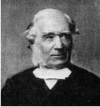 |
The Reverent John Kirk (1813-1886) of Scotland , like Barton Stone of America, started out an Orthodox Presbyterian and ended up a proponent of "bare faith" theology and help start the Evangelical Union. While New Light Calvinists taught "God does, man wills", Evangelical Union ministers taught, "man wills, God does". See page 101 of the Evangelical Repository Magazine to see how similar their "bare faith" theology is to Campbellism . John Kirk incorrectly assumed that Charles Finney was a "bare faith" non-election minister like those in the Evangelical Union of Scotland. |
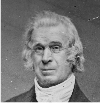 |
Nathan Bangs (1778-1862) was an influencial Methodist preacher that saw as early as 1802 the problem inherent in Hopkinsian theology that elevated disinterested benevolence and diminished religious affections as evidence of regeneration. In 1815, he wrote The Errors Of Hopkinsianism Detected and Refuted. The rebuttel, A Vindication, Of Some Of The Most Essential Doctrines Of The Reformation written by Presbyterian Hopkinsian minister Reverend Seth Williston (1770-1851) is also available here. |
Nathan Bangs did not understand the New Light Calvinist minister's consecutional basis for asking seekers to make an immediate decision for Christ. If you would like to learn what Bangs did not know, please click here. He, like the Puritan Calvinists before Samuel Hopkins, did not connect the decision for Christ with regeneration. Methodists and all Orthodox Evangelicals before Samuel Hopkins asked seekers to repent and submit to God, but left regeneration up to the sovereignty of God. By 1840, Nathan Bangs would see an increase in "don't trust your feelings" and "do you believe this scripture" approach in New Light Calvinist Inquiry Rooms. But this was more the result of ministers schooled in Scottish Common Sense Realism at Princeton Theological Seminary than the remaining Hopkinsians, who were dying off.
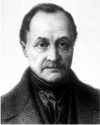 |
Auguste Comte (1798-1857) is considered the father of socialism and the founder the Logical Positivism school of philosophy. Comte provided a social evolution explanation for "revealed" religions that denied supernatural connection with a personal god in his "Religion Of Humanity". His view of the "metaphysical" stage of religion reminds one of Scottish Common Sense Realism (see John Witherspoon) that greatly influenced 19th century New Light Calvinists. |
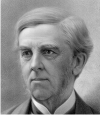 |
Oliver Wendel Holmes, Sr. (1809-1894) is a good example of the nineteenth century renaissance man, embarrassed by the Calvinism of his father. He is listed here, however as the author of the One-Hoss Shay, a satirical work which described Calvinism as a perfect, closed system, unable to stand the rigors of modern examination, falling apart altogether in 1855. |
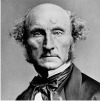 |
John Stuart Mill (1806-1873) is considered the most influencial English speaking philosopher or the nineteenth century. |
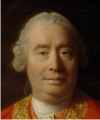 |
David Hume (1771-1776) is considered with John Locke, the main purveyor of empiricism. Scottish Common Sense Realism was formulated in large part as a defense against the popular philosophy of Hume. |
 |
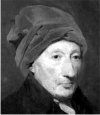
John Locke's 1632-1704 The Reasonableness of Christianity is referred to by orthodox divines as promoting the error of intellectual assent as saving faith very similar to the "bare faith" of Calvinist Robert Sandeman in the eighteenth century and the "bare faith" of Restorationist Alexander Campbell in the Nineteenth century (with water baptism). The Relation of John Locke to English Deism, a 1918 dissertation, is provided to dispel the idea that Locke was merely a deist. Ironically, Locke promoted "bare faith" more for political reasons than theological. He spent many years in exile because of religious persecution, and wanted to eliminate the endless fighting. |
 |
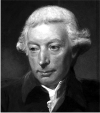
Thomas Reid (1710-1796) was the founder of the Scottish School of Common Sense promoted by John Witherspoon when he came to the American college of New Jersey (later called Princeton). Reid's Works present salvation as metaphysical moral persuasion of the Word of God and not supernatural regeneration. Reid philosophy is the begining link in the chain to Decisional Regeneration. |
 |
Adam Ferguson (1723-1816) was one of the main philosophers in the the Scottish School of Common Sense. |
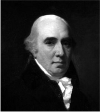 |
Dugald Stewart (1753-1828) was one of the main philosophers in the the Scottish School of Common Sense. |
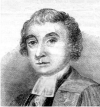 |
James Beattie (1735-1803) was one of the main philosophers in the the Scottish School of Common Sense. His writings influenced John Witherspoon. |
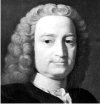 |
Francis Hutcheson (1694-1746) was one of philosophers that laid a foundation for the Scottish School of Common Sense. His writings influenced John Witherspoon. |
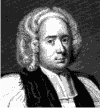
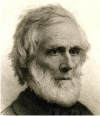 |
Horace Bushnell (1802-1876) was educated at Yale. Like Henry Ward Beecher, he believed science, socialism and psychology more than the Bible, and his Congregational Church was disfellowshiped. His salvation theories dismissed supernatural regeneration in favor of metaphysical moral persuasion similar to that offered by Scottish Comon Sense Realism. For that reason he promoted education as the best way to save children. |
NEW LIGHT CALVINIST LITERATURE |
|
Notes on Classical Literature:
In order to understand Calvinism versus New Light Calvinism, it is helpful to understand what the terms Pelagian, Semi-Pelagian and Orthodox meant before the Protestant Reformation. If you read the Church Fathers, you'll find they argued the same points we argue today, except with a very important difference... they saw the supernatural workings of God and demonic spirits as possible in all circumstances. This meant common grace, common repentance and common faith were not exempt from "religious affections" in any way before and after regeneration. The "decision for Christ" in Augustine's time was not seen as "saving faith", and regeneration had to be "proved' by thought and actions over a lifetime. In fact, because so many baptized persons recanted, the church, instituted in the second century a probation period of an average of two years before baptism. The Reformers not only took exception to the Catholic view of implicit faith, but also it's view of the workings of God and Satan as possible in all men. Their disregard for "religious affections" eventually would evolve into a psychological view of "saving faith" that could be nothing more than intellectual assent to the decrees of God, which would have seemed as heretical to Augustine as the Semi-Pelagian views of John Cassian. The "saving faith" of Scottish Common Sense Realism evolved into what was in effect, a "bare faith" agreeing with scripture, which the baseball player turned minister, Billy Sunday saw as all the evidence one needed to be a "Sunday Convert".
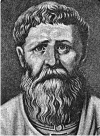 |
Augustine 354-430. |
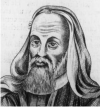 |
Pelagius 390-418. |
 |
John Cassian 360-435. |
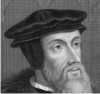 |
John Calvin 1509-1564 |
CLASSICAL LITERATURE |
Notes on Pre-First Awakening Literature:
Many Puritan divines are listed here. All were Preparationists that would have had a problem with the New Light Calvinist abandonment of law works and the means of grace as preparatory to regeneration. The Ann Hutchison affair highlighted the problems of antinomianism and the divorcing of works from grace when religious affections are considered the litmus test for regeneration. Many books are listed here because they are important as guideposts of Puritan thought.
Cyprian Strong's A discourse on Acts 2:42 is a repudiation of the practice of "Owning the Covenant" which was started in conjunction with the Halfway Covenant (1662) in which a person who had been baptized as an infant but not experienced regeneration would be allowed to baptize his children if he "Owned the Covenant", which was a "duty of faith" (common faith, not what people today call saving faith). Owning the Covenant was the precursor to today's "decision for Christ", except the Puritans recognized the person was not regenerated and could not have the Lord's Supper until he was regenerated.
Thomas Hooker's The Soules Preparation For Christ (1632) is perhaps the best single explanation of how the Puritan Preparationists viewed the role of common grace, common repentance and common faith before regeneration. Hooker's The Poor Doubting Christian Drawn to Christ (1629) is usefull in diagnosing and directing sinners and saints in the Inquiry Room.
Thomas Boston's Human Nature In Its Fourfold State contains a wealth of information on Puritan Preparationist thought.
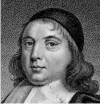 |
John Flavel (1627-1691) is listed here becauseArchibald Alexander claimed to be influenced by his writings more than any other divine. Unfortunately, Alexander abandoned Flavel when it came to the Biblical operation of the Holy Spirit and demons, the dual nature of regenerate man, and the evidences of regeneration in "religious affecetions". Flavel's Mystery Of Providence is provided do the reader can see how far Alexander departed from his teacher. |
PRE-FIRST GREAT AWAKENING LITERATURE |
|
Notes on First Awakening Literature:
The most important books listed here are those by Jonathan Edwards. It was his two most prolific disciples Samuel Hopkins and Joseph Bellamy that codified the New Light Calvinist idea of a decision for Christ being the only acceptable response to the gospel. For that reasons, Preparationists sometimes blame Jonathan Edwards for all the errors that have resulted from New Light Calvinism. This criticism is just as misplaced as the criticism of Charles Finney for decisional regeneration.
FIRST GREAT AWAKENING LITERATURE |
|
| Half-Way Covenant Joseph bellamy | |
Notes on Assorted 18th Century Literature:
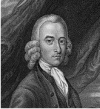 |
Robert Sandeman (1718-1771) is listed here for being an early example of the intellectual assent as "saving faith" heresy. He ridiculed New Light Calvinists for looking for evidence of regeneration, saying if a person was elected, "bare faith" was the only evidence needed. Sandeman elevating the Gospel above the Holy Spirit as the agent of regeneration. Sandeman's Letters On Theron And Aspasio is his most famous work. Starting in the 1820's, Baptist circular letters regularly cited Sandeman as the influence that gave birth to Campbell's view of water baptismal regeneration. |
Robert Sandeman was the "bare faith" theologian that changed the debate between first generation New Light Calvinists and and Old Light Calvinists from "religious affections" to the validity of ANY immediate evidence of regeneration as being reliable. It was Sandeman's public debate with James Hervey that caused John Witherspoon to defend Hervey against Sandeman while providing a "kinder, gentler", metaphysical view of regeneration that would eventually evolve in the United States into the BIST system in the Inquiry Room. Witherspoon moved toward Sandeman in admitting that any immediate evidence of regenertion was suspect, even the gold standard of "disinterested benevolence". All "bare faith" ministers are referred to here as SANDMEN in part to identify them as heirs of Sandeman.
SCOTTISH COMMON SENSE REALISM |
|
Notes on Scottish Common Sense Realism Literature:
It was not Charles Finney that changed the way Protestants looked at regeneration. While it is true that Finney was educated in Scotish Common Sense Realism for two years, it is NOT true that he adhered to the theory that regenertion was merely a "tipping point" when the rational mind was convinced to serve God over self...that was what the Scottish Common Sense Realists taught, and Finney rebelled against. The Scottish Common Sense Realism taught by John Witherspoon since 1768 at the College of New Jersey, was spread through Liberty College and other Presbyterian schools, and within a generation, had replaced Hopkins and Bellamy theology as the premier salvation theology. EVERY innovation that evolved into the heresy of decisional regeneration came from Scotish Common Sense Realism view of "saving faith" with de facto regenertion.
ASSORTED EIGHTEENTH CENTURY LITERATURE |
|
Notes on Assorted 19th Century Literature:
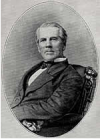 |
A. B. Earle (1812-1895) was a Baptist evangelist who conducted Union Meetings during the same period as Charles Finney. He is perhaps best known for his "Ten Evidences of Conversion". His 1868 book Bringing In The Sheaves he wrote "Many persons pray and labor to become Christians, but do not succeed simply because they do not surrender their wills to God. These persons are sincere and really want to become Christians. But alas, many of them live and die only seekers, never finding Christ. Many wonder at this, how can it be so? The reson is, the will is not given up. The seat of the rebellion against God is in the will. generally, the seeker after Christ gives up all the larger objects, but clings to some little thing that in itself is of no importance. But they will not let go." |
The Connecticut Evangelical Magazine was published by New Light Calvinists. Starting at the beginning of the century, "religious affections" are considered the most important initial evidence of regeneration with "disinterested benevolence" being a subset of religious affections. As the years pass, New Light Calvinists increasingly promoted unconditional acceptance of the "decrees of God" as "disinterested benevolence" and initial evidence of regeneration. Then, after the denominational scisms brought on by the Camp Meetings, most New Light Calvinists increasingly distanced themselves from religious affections as evidence of regeneration.
A.C. Dixon succeeded Charles Spurgeon as Pastor of the London Tabernacle. You can gain an insight into the DOWNGRADE of theology warned by Spurgeon by reading Dixon's works which redefine spiritual things with a psychological paradigm. Twentieth century books by Dixon are also here.
Charles Hodge was a leader in trying to prevent the New Light Calvinist abstraction of doctrine and promoted the sovereignty of God in supernatural regeneration.
The Presbyterian Quarterly is extremely useful as a real time account of how late nineteenth century New Light Calvinists saw themselves in the light of past generations before the heresy of decisional regeneration was popularized by Billy Sunday. For perhaps the most important article of 1876, go to Revivals_of_the_century_by_Lyman_H_Atwater.htm
Soren A. Kierkegaard, perhaps the first Christian Existentialist, typifies the introspective, self-absorbed tendencies of later Liberals like Henry Ward Beecher. His works are listed here as the best example of psychological soul-searching which many Protestants in the nineteenth century accepted as fulfilling the Gospel as they abandoned the focus on the Person of Christ. This shift from Holy Spirit influence to the influence of psychology prefigures the modern emphasis on the "decision for Christ" being seen as the moment of conversion without the need of supernatural regeneration. Kierkegaard was a "logical positivist" who taught that faith is a metaphysical force.
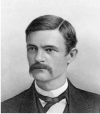 |
Sam Jones'(1847-1906) Autobiography is listed here because he is often cited as an influence of Billy Sunday. By reading the writings of Sam Jones you will come to understand what a “decision for Christ” meant just before Billy Sunday changed its meaning. Sam Jones summed up the significance of a legitimate decision for Christ as “If a man will do before he gets religion (regeneration) just as he thinks he would do after he gets it, he will get it.” This was a late 19th century way of saying what the Puritans taught - that if a person sought salvation with their whole heart, using all the means of grace, it was a fairly reliable indication that God would eventually regenerate them. |
One of Sam Jones' famous sermons told how a man who wanted to be saved lived as though he was already saved ...praying, reading scripture, attending church, doing every good work God gave the grace to do. "And he just plowed his furrow along that way for about two weeks, and got the biggest case of religion that any man ever heard of. Now that is the whole thing in a nut-shell. The means of grace will take a man to God. “If any man will do the will of God, he shall know the doctrine.” (John 7:17)
George Soltau's The Enquiry Room is a manual made for the D.L.Moody revivals in England. It is the best example of how late nineteenth century altar workers counselled inquirers who had made a "decision for Christ". The PDF version here is a scan of one of the few remaining copies. For a text version, go to http://www.inquiryroom.com/the_inquiry_room_by_george_soltau.htm
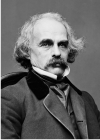 |
Nathaniel Hawthorn's (1804-1864) Cellestial Railroad, a parody of Pilgrim's Progress, is provided here as an example from 1843 of how American Christianity had been influenced by the three esses of science, socialism and psychology long before the Civil War. The most interesting part, from the point of view of the significance of the New Light Calvinist decision for Christ is the elimination of the Slough of Depond. This illustrates how completely puritan preparationism had fallen out of favor. |
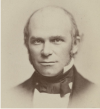 |
Theodore Parker (1810-1860) is a good example of the restless experimentation of educated men who question the religion of their fathers. The period immediately before the Civil War saw spirituality and religion mixing with humanism, social reform and science, similar to the 1960's hippie movement. Harvard Divinity School prepared him to be a skeptic, a transcendentalist, a Unitarian minister, and finally a social activist. |
Theodore Parker's apostasy is emblematic of many educated ministers who could not reconcile their humanistic beliefs with the claims of the Bible. He "came out" in a sermon where he said scriptures did not reflect the truth. He argued for a type of "Christ consciousness" without the need of an historic Christ. He rejected all miracles and revelation and saw the Bible as full of contradictions and mistakes. He said people should experience God intuitively and personally, and that they should center their religious beliefs on individual experience. This transcendentalist view was the way sinners could justified their lust and distanced themselves from the activity of the Holy Spirit as they filled their lives with social activism and noble causes.
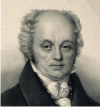 |
Franz Joseph Gall (1758-1828) is known as the father of phrenology, which although thoroughly discredited today as psuedo-science, started the irrational view that continues to this day as psychology, that is, that the mechanical operations of the brain account for the entire explanation for the activity of the soul, including morality and salvation, reducing spiritual excitements to a syndrome (see conversion syndrome). |
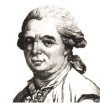 |
Franz Anton Mesmer (1734-1815) is known as the father of hypnotism, or what he called Animal Magnetism. It was later called Mesmerism and then Hypnotism when psychological explanations arose for the phenomenon. Originally, mesmer theorised that there was a energy transfer between all living and non-living objects which he could manipulate. |
Creeds Of Evangelical Churches Volumes 1-3 contain every Creed, Confession, Statement Of Faith and Declaration of interest to evangelical scholars up till 1877. Of particular interest in volume 3 are the confessions made by denominational scismatics from the Seond Great Awakening. The Auburn Declaration of 1837 is a most important New Light Calvinist statement of doctrine intended to placate Old Light Calvinists that the New Lights has not departed orthodoxy. The document went so far as to flatly admit the possibility of infant damnation. Other items of particular relevance to the evolution of decisional regeneration is The Confession of the Cumberland Presbyterian Church of 1829 and The Free-will Baptist Confession of 1868.
Essays On The Means Of Regeneration is a relatively short explanation from 1829 of the pitfalls of the New Light Calvinist ministers telling people to "use the means of regeneration" or "make yourself a new heart" without explaining the consecutional (saving faith being the consequence of saving grace) basis.
Methodist Magazines record revivals that promoted a mature version of "disinterested benevolence" as part of their religious affections approach to determining regeneration. By 1828, New Light Calvinists ridiculed the Methodist approach as based on animal feelings, even though they had a similar approach at the beginning of the century.
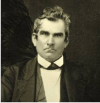 |
Peter Cartwright was the most famous Arminian preacher of the Second Great Awakening. His Autobiography, along with Lyle's Diary, can help the modern reader understand what the Second Great Awakening and the Presbyterian Sacramental Meetings (later called Camp Meetings) were like. |
Memoir Of Rev. James Patterson (1779-1837) provides typical evangelism stories before 1820 of an American minister that used the Inquiry Room. "When you have, by these inquiries into his spiritual state, reason to conclude that he is yet unconverted, your next business is to endeavor with all your skill and power to bring his heart to a sense of his condition."
ASSORTED NINETEENTH CENTURY LITERATURE |
|
Notes on Restorationist Literature:
The American Restorationist movement was led by Alexander Campbell and Barton Stone . They thought their form of salvation was a "RESTORATION" of the salvation of the first century church. They rejected all creeds and denominationalism as man-made daughter harlots of the mother harlot Roman Catholic Church.The Restorationist belief in water baptism as the moment of regeneration was identical to the modern emphasis on the "decision for Christ" being the moment of regeneration. Both ignore the need for a change of heart and a change wrought by the Holy Spirit as confirmation of regeneration. The 20th century Evangelical decision for Christ and the Restorationist water baptism are considered evidence of regeneration in themselves. Restorationists have the dubious distinction of being the first mainstream Christian movement to teach bare faith theology with de facto regeneration. Alexander Campbell stole thousands of converts from Baptist denominations with his baptismal regeneration almost 100 years before Billy Sunday made nominal Christianity the norm with decisional regeneration.
 |
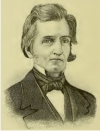
Alexander Campbell's (1788-1866) view of saving faith was close to that of John Locke ... the"bare faith" that Christ is Messiah and was raised from the dead. The intellectual assent to the truth of the Gospel for Campbell was to be exhibited in water baptism, considered the moment of regeneration. Campbell took thousands of converts from Baptist churches he previously communed with. Campbell's Millenial Harbinger constantly ridiculed Baptist, New Light Calvinist and Methodist views of the necessity for supernatural regeneration and the indwelling of the Holy Spirit in salvation. Campbellism salvation is based on the PRESUMPTION of implicit faith as saving faith. |
 |
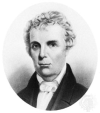
Nathan Lewis Rice (1807-1877) view of the activity of the Holy Spirit was formed by his education at Princeton Theological Seminary. So when he confronted Alexander Campbell with a quote from his The Christian System, “Whatever the word does, the Spirit does; and whatsoever the Spirit does in the work of converting men, the word does” in a debate in 1843, Campbell said he was NOT a strict “Verbal-Restrictivist”, and that he believed in some way the Spirit quickened scripture in the heart, which should have silenced Rice, because that sounds like the "truth impression" theory taught at Princeton. |
 |
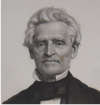
Barton Stone (1772-1844), like Evangelical Union ministers in Scotland, had been a Presbyterian minister. He had a more enthusiastic, emotional view of salvation than Campbell. In fact, Stone did not initially believe water baptism was the moment of salvation. He stopped preaching his own beliefs when he joined forces with Alexander Campbell in 1832. The Biography of Elder Barton Warren Stone tells how his experience in the camp meetings of the Second Great Awakening led him to believe America was experiencing a special dispensation before the pre-millenial coming of Christ. This contributed to his accepting "bare faith" as a restoration of New Testament truth. |
 |
Winfred Ernest Garrison (1874-1969) is listed here because of his excellent book, The Sources Of Alexander Campbell's Theology, a thorough exposition of the historical forces that produced Campbell's theology. Garrison's The March Of Faith, subtitled The Story Of Religion In America Since 1865 is also included here because it accurately describes the forces of liberalism after the Civil War that made looking for evidence of "disinterested benevolence" in the Inquiry Room almost laughable in light of the fashionable views of God and sin that were very similar to those held by deists in previous centuries. After the Civil War, the 3 esses of science, socialism and psychology became the new paradigms by which theology was shaped and evangelism evolved. |
Here is a sample from The Sources of Alexander Campbell's Theology, page 225: " When faith is isolated for
definition, it is conceived in a purely
intellectual form as the acquisition of
information through testimony, the acceptance
of certain propositions as true.
Applying strictly this theological definition,
the object of faith is certainly
not a person (Christ) but statements about a person (Christ).
Campbell's Lockian conception of
faith stopped here. But he saw at once
that, considering faith not as an isolated
mental act, but as the first step in a
change of the whole man... For
religious purposes, the object of faith, is
the person of Jesus in whom the believer
is to trust as a Savior. But the theological
definition seldom gets beyond the
assertion that faith in Jesus is acceptance
of a certain proposition about him.
It can be said therefore that, as regards
the conception of faith, his theological
position was a thorough intellectualism...This is not the only case in which Mr.
Campbell transcends the limits of his
own theology." To sum up... the dilemma of Campbell and Locke was they expressed "bare faith" as saving, but went on to explain that if someone's life was unchanged by his faith, his faith could not have been saving. Both Campbell and Locke could not reconcile "bare faith" with reality. If there is no revelation of the Person of Christ, there is no saving faith. If there is no regeneration and no indwelling of the Holy Spirit, there is no revelation of the person of Christ, and therefore, no saving faith.
RESTORATIONIST LITERATURE |
|
Notes on Assorted Twentieth Century Literature:
Joseph Kemp's The Soul Winner and Soul Winning (1916) is a typical evangelism book before the popularization of the Billy Sunday heresy that all inquirers are "converts" and there is no need for an inquiry room. Kemp warns inquiry room workers, "To take a man into a corner, kneel down beside him, open a Bible, point to a passage, and say, "Can you read that? Do you believe it? Then you are saved" is the most perilous and blasphemous business. I have more than once taken a man by the collar and put him out of the inquiry room for doing that...You are never to tell a man that he is saved. The demonstration, as well as the power, is of the Spirit of God. The last surrender of the soul is to be not to the preacher, but to Christ, and the first impression of possession upon that soul is to come not by something I say, but by Christ's own activity."
ASSORTED TWENTIETH CENTURY LITERATURE |
|
Here is the first of seven parts of The Graham Formula
video
on www.youtube.com
Go to http://www.youtube.com/profile?user=patrickmcintyre
to watch the remaining six parts of the video